
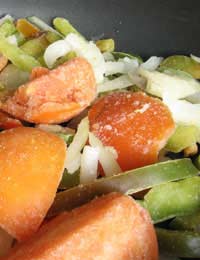
Freezing is a fast and easy way to preserve your the vegetables you’ve grown in your garden. You can also freeze store‐bought vegetables that can’t use right away, or you can chop and freeze vegetables to have ready to add to soups or stews. Freezing vegetables is easy, and in most cases you don’t need special freezing equipment.
Jump To...
The Advantages Of Freezing Vegetables
- Freezing retains 100% of the vitamin C in vegetables
- The colour, flavour and texture of frozen vegetables is more like fresh than other preservation methods
- Freezing is quick and easy
- Freezing doesn’t require specialised freezing equipment
The Problems With Frozen Vegetables
- Freezing vegetables causes the loss of vitamins E and B6
- You may not have enough space in your freezer compartment
- The cost of buying and running a standalone freezer can be expensive
Freezing Equipment
Freezing equipment includes:
- Containers: sealable plastic bags, rigid plastic containers, or straight‐sided, wide‐mouth freezer jars (for easier removal of frozen contents)
- Trays that fit in your freezer
- Large kettle
- Vegetable brush
- Absorbent towelling
- Paring and chopping knives
- Cutting board
- Pot holders
- Kitchen timer
- Large bowl or pot
- Ice
- Large sieve or wire basket
- Colander
- Tongs
- Indelible pen and freezer tape
General Tips For Freezing Vegetables
- Set your freezer temperature at 0°F (‐18°C) which keeps vegetables safe and is energy efficient
- Freeze only good‐quality vegetables that are on the young side; larger vegetables are better canned or stored in a root cellar
- Squeeze air out of plastic freezer bags: air promotes oxidation and freezer burn, affecting vegetable quality
Blanching Vegetables Before Freezing
Most vegetables should be blanched (immersed in boiling water) before freezing unless they will be consumed within three months. Blanching destroys enzymes that affect the vegetable’s flavour, colour and texture. Blanching times vary by vegetable.
Basic Procedure for Freezing Vegetables
Consult a good book on food preservation for appropriate blanching times and details on freezing each vegetable. Below is the general procedure for freezing vegetables:
- Assemble your freezing equipment
- Start boiling water in your kettle
- Thoroughly wash vegetables with a vegetable brush; remove all traces of dirt, stems, or other debris
- Drain vegetables on absorbent toweling and pat dry
- Cut up vegetables if desired (slice, dice, etc.)
- Fill large bowl or pot with cold water and ice
- Place vegetables in sieve or wire basket
- Plunge basket into rapidly boiling water and blanch vegetables for recommended time for particular vegetable
- Pour the blanched vegetables immediately into the bowl of ice water to stop cooking
- When cooled, lift vegetables from ice water, spread out on towelling, and pat dry to remove excess moisture
- Put vegetables in a shallow pan and freeze solid
- Pack loose vegetables in resealable plastic bags or other containers
- Label container with contents and date (labelling before filling is easier)
- Freeze vegetables
Tray Freezing For Vegetables
If you’re pressed for time, tray freezing is a quick alternative to traditional freezing methods. Wash and dry the vegetables, cut them up (the smaller the pieces, the quicker they’ll freeze), spread them out in a shallow pan and freeze. Once they’re frozen, pour them into freezer bags and keep as per other frozen vegetables. Use within 2 months, preferably in sauces or stews.
Tips For Freezing By Vegetable
Vegetables that freeze well include: asparagus, beans, broccoli, cauliflower, corn, peas, spinach, Swiss chard, and summer squash. Below are a few tips for freezing common vegetables:
Beans
Wash, pat dry, cut off the ends, blanch for 3 minutes and put in freezer bags.
Cucumbers
Cucumbers aren’t suited to the usual freezing methods but can be frozen in brine. See “Pickling and Brining” for information.
Onions
Cut onions will only keep 3 days in the refrigerator. If you only need half an onion for a recipe, dice the other half, tray freeze it and bag it for a quick addition to soups or stews.
Peppers
Wash, dry, cut off the stem end and remove the seeds and white membrane. Whole pepper cases for stuffed peppers can be blanched for 3 minutes, tray frozen and then packaged in plastic bags. Peppers can also be diced or cut into strips or rings, blanched for 2 minutes and frozen.
Summer Squash
Cut summer squash into rounds about a quarter of an inch (6 mm) thick, blanch for 3 minutes and freeze. These are great in mid‐winter soups. For large overgrown courgette: peel, grate, press out the liquid, and freeze in rigid plastic containers.
Tomatoes
Plum or paste tomatoes are best processed in a boiling water bath. See “Canning Your Vegetables“. In a pinch, you can freeze whole, unpeeled tomatoes on a tray and repack in freezer bags when frozen. Use for sauces or soups.
